
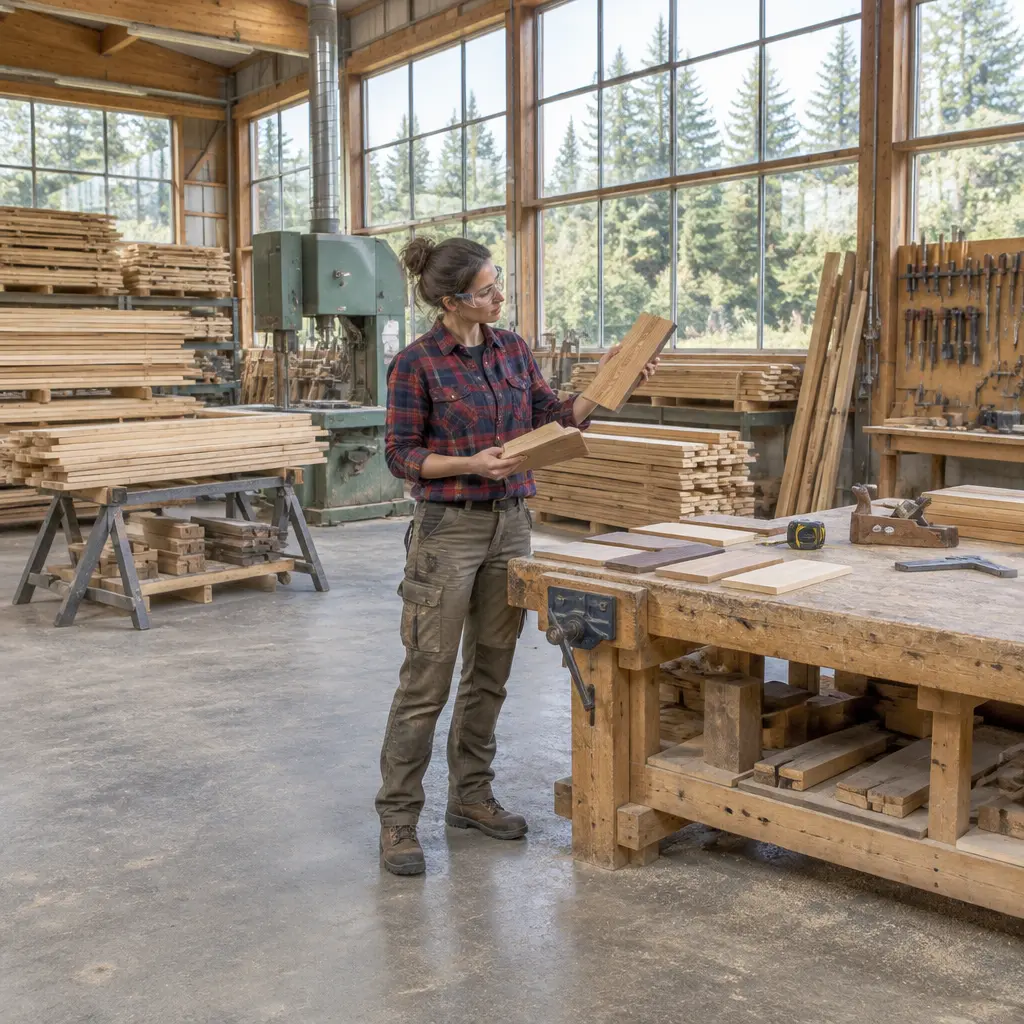
Local wood species selection is the practice of matching wood grown near a project to the work it must perform, rather than choosing boards chiefly for color or grain. The best choice depends on properties such as strength, hardness, decay resistance, dimensional stability, workability, and availability. The U.S. Forest Products Laboratory’s Wood Handbook documents substantial variation in these properties among species, while the USDA Forest Service reports that wood products store carbon for as long as they remain in use. A sound selection process therefore starts with the use—structural framing, outdoor exposure, flooring, cabinetry, or furniture—then checks species, grade, moisture, and sourcing. This approach can improve service life, reduce unnecessary treatment and replacement, and help buyers make more informed regional purchasing decisions.
Match local wood species to intended use
A local species is a tree species harvested or processed within a region’s supply area; “local” has no universal mileage threshold. Selection means matching that species’ documented properties and available product grades to an application’s performance requirements. The Forest Products Laboratory defines wood performance through measurable properties—including strength, stiffness, hardness, shrinkage, and resistance to biological deterioration—rather than appearance alone.
The relevant alternatives are not simply “hardwood” and “softwood.” Those terms describe botanical groups, not a reliable ranking of strength or durability. For example, a softwood may be appropriate for structural framing, while a dense hardwood may suit flooring or wear surfaces. Within a species, grade, growth characteristics, drying, and manufacturing also affect performance. The American Softwood Lumber Standard, for instance, grades structural lumber by properties relevant to its intended structural use.
This distinction matters because a visually attractive board can still be unsuitable for a wet, load-bearing, or high-wear location. The next step is to translate the project into specific performance needs.
Structural framing and load-bearing work
Structural lumber must meet the design requirements for strength, stiffness, dimensions, and grade. Designers and builders should use species-and-grade combinations recognized by applicable building codes and grading rules, not make decisions from species reputation or appearance. The American Wood Council’s National Design Specification for Wood Construction provides design values used for structural design; values depend on factors such as species, grade, product size, and service conditions.
Regional examples can include Douglas-fir and hemlock-fir in parts of the western United States, and southern pine in the Southeast, but availability does not establish suitability by itself. Confirm the lumber stamp or supplier documentation, verify the grade and moisture condition, and have structural sizing checked against local code and project loads.
Exterior, ground-contact, and moisture-exposed uses
Outdoor wood needs appropriate resistance to decay and insects, or a specified preservative treatment, as well as details that shed water and allow drying. The Forest Products Laboratory’s Wood Handbook explains that natural durability differs among species and even among parts of a tree. Heartwood is often more durable than sapwood, but a species name alone is not a guarantee of performance.
For decks, fences, and other exposed work, check whether the product is rated for the actual exposure, including ground contact where relevant. The American Wood Protection Association’s use-category system distinguishes exposure conditions and treatment requirements. Good drainage, end-grain protection where appropriate, and maintenance remain important: durable material cannot compensate for details that trap water.
Flooring, furniture, and high-wear interiors
Interior applications call for a different balance: hardness and abrasion resistance may matter for floors, while stability, workability, and finishing behavior can be more important for furniture or cabinetry. The Janka hardness test measures the force needed to embed a steel ball into wood under a specified procedure. It is useful for comparing resistance to indentation, but it does not alone predict durability, scratch resistance, or overall suitability.
A local oak, maple, birch, or other available species may be a good choice when its grade, drying, and intended finish match the project. Ask the mill or supplier for moisture content and product specifications, and assess sample boards under the project’s lighting. Color and grain are valid design considerations—but they should follow, not replace, performance checks.
Evaluate local wood species by measurable properties
Once the application is clear, compare candidate species using data and product documentation. The Forest Products Laboratory’s Wood Handbook: Wood as an Engineering Material is a major technical reference for wood anatomy, physical properties, mechanical behavior, drying, and durability. Its central practical lesson is that no species is universally “best”: properties vary, and design conditions determine which ones matter.
Strength, stiffness, and grade
Strength describes resistance to failure under loads; stiffness describes resistance to deformation. They are related but not interchangeable. A shelf that sags, for example, may have a stiffness problem even if it does not break. For structural products, use published design values for the exact species group and grade, and account for span, load, moisture, and other design factors. The USDA Forest Products Laboratory publishes reference data, while recognized grading agencies classify lumber for defined uses.
Hardness, wear, and workability
Hardness can help compare flooring and work surfaces, but denser or harder wood may be more difficult to cut, fasten, or sand. Grain orientation and defects also affect machining. Consider the complete process: tool availability, joinery, fasteners, finishing, and likely repair. A species that is locally abundant and straightforward to work may be more practical than a harder alternative that requires specialized handling.
Shrinkage, moisture, and dimensional stability
Wood exchanges moisture with surrounding air, causing it to shrink or swell as moisture content changes. This movement can produce gaps, cupping, checks, or binding when wood is installed too wet or used in an environment unlike its conditioning conditions. The Forest Products Laboratory’s handbook provides species-specific shrinkage information and discusses how drying affects wood. Buyers should ask how lumber was dried and stored, then allow for acclimation and appropriate movement in the design.
Natural durability and treatment
Natural durability refers chiefly to resistance to decay fungi and certain insects; it is distinct from strength and hardness. Durability varies by species, heartwood content, exposure, and detailing. Where a naturally durable species is unavailable or unsuitable, properly treated wood may be an option if the treatment is approved for the use. The U.S. Environmental Protection Agency regulates wood preservatives as pesticides, and the American Wood Protection Association publishes standards that specify treatment uses. Follow label and code requirements rather than improvising with coatings or chemicals.
Account for sourcing, cost, and regional supply
Performance is only one part of a responsible selection. A species may be technically appropriate but difficult to obtain in the required dimensions, grade, or quantity. Local supply can reduce transportation distance, support regional mills, and make replacement material easier to source, but “local” is not automatically synonymous with sustainably harvested or lower-impact. Verify origin and management claims with suppliers and relevant certification documentation.
Availability and supply-chain checks
Before specifying a species, ask local sawmills and lumberyards about current inventory, lead times, standard sizes, drying capacity, and the consistency of future supply. Small or custom mills may offer useful regional species, but product dimensions and grades can differ from standardized commodity lumber. For a project that will require matching material later, reserve extra stock or confirm that the species and grade are likely to remain available.
Environmental claims and product life
Wood stores biogenic carbon while in use, but a product’s broader climate and ecological effects depend on forest management, processing, transport, service life, and end-of-life handling. The USDA Forest Service’s research on harvested wood products tracks carbon stored in products over time; this is not a claim that every wood product is automatically carbon-neutral. Choose credible sourcing information, design for durability and repair, and avoid replacing serviceable material merely to follow a trend.
Cost beyond the purchase price
A useful comparison includes installation, finishing, treatment, maintenance, waste, and expected replacement—not only price per board foot. A less expensive species can cost more over time if it requires frequent repair in a demanding exposure. Conversely, a premium species may be unnecessary where a readily available, code-compliant product performs adequately. For a chart or project specification, compare candidates across intended use, grade, durability, dimensional movement, delivered cost, and evidence of origin.
Use a practical selection process
A disciplined workflow turns general species knowledge into a defensible purchase. For structural or regulated work, include a qualified designer or building official; for finish work, involve the mill, installer, or fabricator early enough to confirm product behavior.
- Define the application and exposure: loads, wear, moisture, ground contact, temperature, and expected service life.
- List the properties that govern performance, such as grade-specific strength, hardness, decay resistance, or dimensional stability.
- Identify locally available species and products, then verify grade, treatment, moisture condition, dimensions, and origin.
- Compare documented properties using authoritative references and supplier records; do not infer performance from common names or appearance.
- Check code, design, installation, and maintenance requirements, then test a sample where finish or machining behavior matters.
For example, a local species proposed for an exposed garden structure should be evaluated for the applicable exposure category, decay risk, treatment or natural durability, drainage details, and replacement availability. A species chosen for a living-room floor instead needs an appropriate product grade, acceptable hardness and stability, and a finish compatible with household use. The same regional board can be a strong choice in one setting and a poor one in another.
Conclusion: choose local wood for performance first
Local wood species selection works best when the intended use leads the decision. Structural projects require verified strength and grade; exterior work requires suitable durability, treatment, and water management; interiors require attention to wear, stability, and workability. Measurable properties, regional supply, sourcing evidence, and life-cycle cost should then guide the final comparison, with appearance considered as one factor rather than the deciding one.
Before purchasing, describe the application to a local mill or qualified professional and request species, grade, moisture, treatment, and origin information. Consult the references below for technical context, and use local building requirements for project-specific decisions. Matching a regional species to its real job can support longer-lasting work and more responsible use of available forest resources.
Sources: USDA Forest Products Laboratory, Wood Handbook: Wood as an Engineering Material, https://www.fpl.fs.usda.gov/documnts/fplgtr/fpl_gtr282.pdf; American Wood Council, National Design Specification for Wood Construction, https://awc.org/codes-standards/publications/nds/; American Lumber Standard Committee, American Softwood Lumber Standard PS 20, https://www.alsc.org/greenbook%20collection/ps20.pdf; American Wood Protection Association, Use Category System: User Specification for Treated Wood, https://awpa.com/standards/; U.S. Environmental Protection Agency, Overview of Wood Preservative Chemicals, https://www.epa.gov/ingredients-used-pesticide-products/overview-wood-preservative-chemicals; USDA Forest Service, Forest Products Laboratory: Research on Wood Products and Carbon, https://www.fs.usda.gov/research/treesearch/