
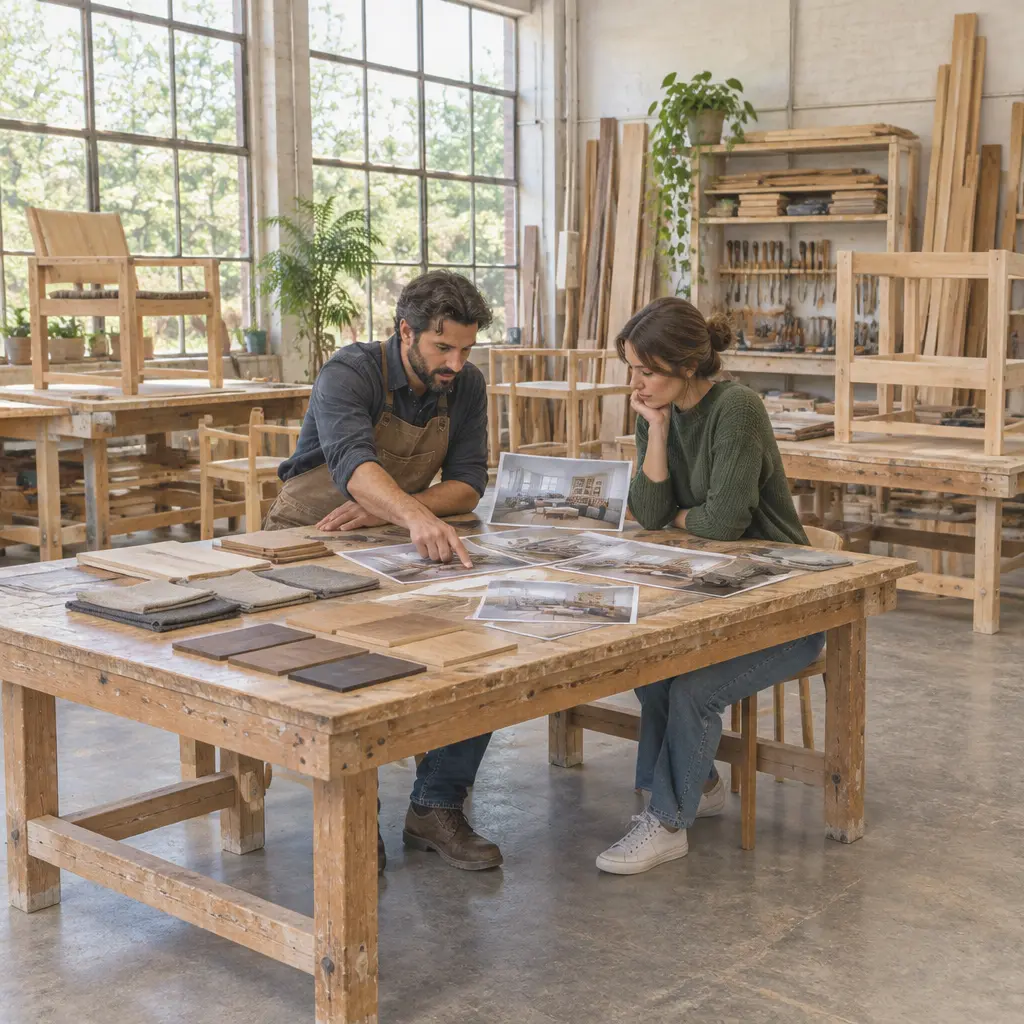
Personal style is the set of visual preferences and practical priorities that make a room feel like yours. Before meeting a furniture maker, define it with a concise brief: collect reference images, identify what you like and dislike in them, note how the furniture must work, and set a realistic budget and size range. This preparation turns a subjective conversation into useful design choices. It also matters financially: the U.S. Bureau of Labor Statistics reports that households spent an average of $755 on furniture and bedding in 2023, making clear expectations valuable before committing to a custom purchase.
Personal style defines the furniture brief
A furniture brief is a short description of the piece’s purpose, appearance, constraints, and priorities. It is not a requirement to arrive with a complete design. Instead, it gives you and the maker a shared starting point for discussing form, materials, construction, and cost.
The American Society of Interior Designers describes interior design as a practice that considers both human experience and the built environment. Applied to custom furniture, that means style is more than a label such as “modern” or “rustic”: it includes how a piece feels to use, how it fits its setting, and what visual qualities you want it to contribute. Useful style clues include shape, proportion, color, texture, material, detailing, and the relationship between old and new.
A clear brief need not be long. One page of notes and a small, purposeful set of images can communicate more than a folder of unannotated inspiration. The goal is to show patterns in your preferences, not to ask the maker to copy another person’s work.
Translate style labels into observable details
Style labels are shorthand, not precise specifications. “Mid-century” might mean tapered legs, warm wood, and a compact silhouette to one person, while another may mean a particular period reference. Explain the features behind the label: for example, “simple rectangular frame, visible oak grain, rounded edges, and no decorative carving.”
Describe preferences in pairs when possible: light rather than dark, visually delicate rather than bulky, matte rather than glossy, or softened corners rather than sharp edges. These contrasts help the maker understand the boundaries of your taste and suggest appropriate design options.
Build a useful visual reference collection
A mood board is a curated set of images that communicates an overall direction. Include furniture examples, room views, material samples, and details such as handles or leg shapes. Add a note to each image explaining what appeals to you; the part you like may be the proportions or finish, rather than the whole piece.
Keep references selective and varied enough to reveal a consistent pattern. If every image shows a different aesthetic, group them by what they share—for example, calm colors, sculptural forms, or visible joinery. You can also include “avoid” examples, explaining what feels too ornate, too dark, or too difficult to maintain.
Function and room context shape the style decision
A piece’s function is the work it must perform, while its context is the physical and visual setting in which it will sit. These practical attributes help narrow style choices: a dining table for daily family use has different requirements from a display console, even if both should suit the same home.
Measure the intended space and record access constraints before the consultation. Note doorways, stairwells, elevators, nearby furniture, outlets, and the routes people need to walk through. A design that looks right in a photograph may be inconvenient if it blocks circulation or cannot pass through the entrance.
Describe use, users, and maintenance
Explain who will use the piece, how often, and under what conditions. A household with young children, pets, or frequent guests may prioritize durable finishes and easy-clean surfaces. A desk may need cable management and storage, while a reading chair may need a particular seat height and supportive arms.
Make trade-offs explicit. A delicate finish may have the exact look you want but show wear sooner; a more resilient finish may change the color or sheen. Ask the maker to explain the maintenance demands of proposed materials and finishes rather than relying on appearance alone.
Record measurements and room conditions
Measure the available width, depth, and height, then check the usable footprint with masking tape or a cardboard template. Record the dimensions of adjacent pieces and the clearance needed for drawers, doors, chairs, or walkways. Bring photos of the room taken from several angles, including close-ups of floors, trim, and existing furniture.
Mention conditions that may affect material selection, such as direct sunlight, humidity, heat sources, or heavy daily use. The maker can then discuss wood movement, finish durability, upholstery choices, and construction details in relation to the actual setting.
Materials and budget turn preferences into workable choices
Material preferences are part of style because wood species, metal, stone, glass, and upholstery each have distinct colors, textures, and visual weight. They also affect durability, maintenance, sourcing, and price. A maker can help translate an aesthetic preference—such as warm, pale wood—into suitable species and finishes, while explaining how natural variation may affect the final appearance.
Budget is a design constraint, not an afterthought. The U.S. Bureau of Labor Statistics’ Consumer Expenditure Survey recorded average annual household spending of $755 on furniture and bedding in 2023. That broad national average is not a custom-furniture price guide, but it illustrates why a custom project should begin with an honest spending range and a discussion of what drives its cost.
Prioritize material, finish, and construction
Identify which qualities matter most: a particular wood species, a low-sheen finish, exposed joinery, a specific upholstery fabric, or repairability. If you are flexible, say so. Asking for a light-colored hardwood look rather than specifying a single species may give the maker room to recommend available options.
Ask to see physical samples when color and texture are important. Screens and photographs can misrepresent both. A finish sample viewed in the room’s lighting can help you judge its undertone and sheen, while fabric samples can be checked against existing textiles and flooring.
Set a budget range and identify priorities
Share a comfortable target and, if useful, a firm upper limit. Ask what the estimate includes, such as design time, materials, delivery, installation, taxes, or revisions. Custom work can involve trade-offs in size, complexity, materials, and finish; knowing your priorities helps the maker propose options rather than guess.
Separate essential requirements from preferences. For example, “must fit a 48-inch alcove and hold heavy books” is a requirement; “prefer walnut and rounded edges” may be adjustable. This distinction makes it easier to protect function while exploring cost-conscious alternatives.
A concise consultation brief helps the maker respond
A consultation brief brings style, function, room conditions, materials, and budget into one practical document. It gives the maker enough context to ask informed questions, estimate feasibility, and identify decisions that need samples, drawings, or measurements.
What to bring to the first meeting
- A short description of the piece and the problem it should solve.
- Room measurements, access dimensions, and photographs of the space.
- A small mood board with notes about what you like and what you would change.
- Preferred and unacceptable materials, colors, finishes, and details.
- A budget range, desired timeline, and any delivery or installation constraints.
- A list of essential requirements and flexible preferences.
Questions to ask the furniture maker
Ask how the maker approaches design development, when drawings or samples are provided, and how revisions affect cost and schedule. Discuss construction methods, material sourcing, finish maintenance, warranties, payment milestones, delivery, and what happens if the final piece differs from the approved specification. These questions clarify the process before work begins.
A useful real-world approach is to describe both the inspiration and the limitation: “I like the light, sculptural look of these references, but the piece must fit this alcove, conceal office equipment, and stay within this budget.” The maker can then propose a design that captures the visual direction without treating an inspiration image as a blueprint.
Conclusion: define preferences, then invite collaboration
Defining your style before meeting a furniture maker means turning broad tastes into observable details and connecting them to the piece’s purpose, room context, material choices, and budget. A selective mood board, accurate measurements, clear priorities, and practical questions make the first conversation more productive without requiring you to arrive with a finished design.
Before booking a consultation, prepare a one-page brief and gather room photos and measurements. Then invite the maker to explain options, trade-offs, and next steps. The result is a clearer path from personal preference to a piece designed for your home and the way you live.
Sources: U.S. Bureau of Labor Statistics, Consumer Expenditures—2023, https://www.bls.gov/news.release/archives/cesan_09252024.htm; American Society of Interior Designers, What Is Interior Design?, https://www.asid.org/about/what-is-interior-design.