
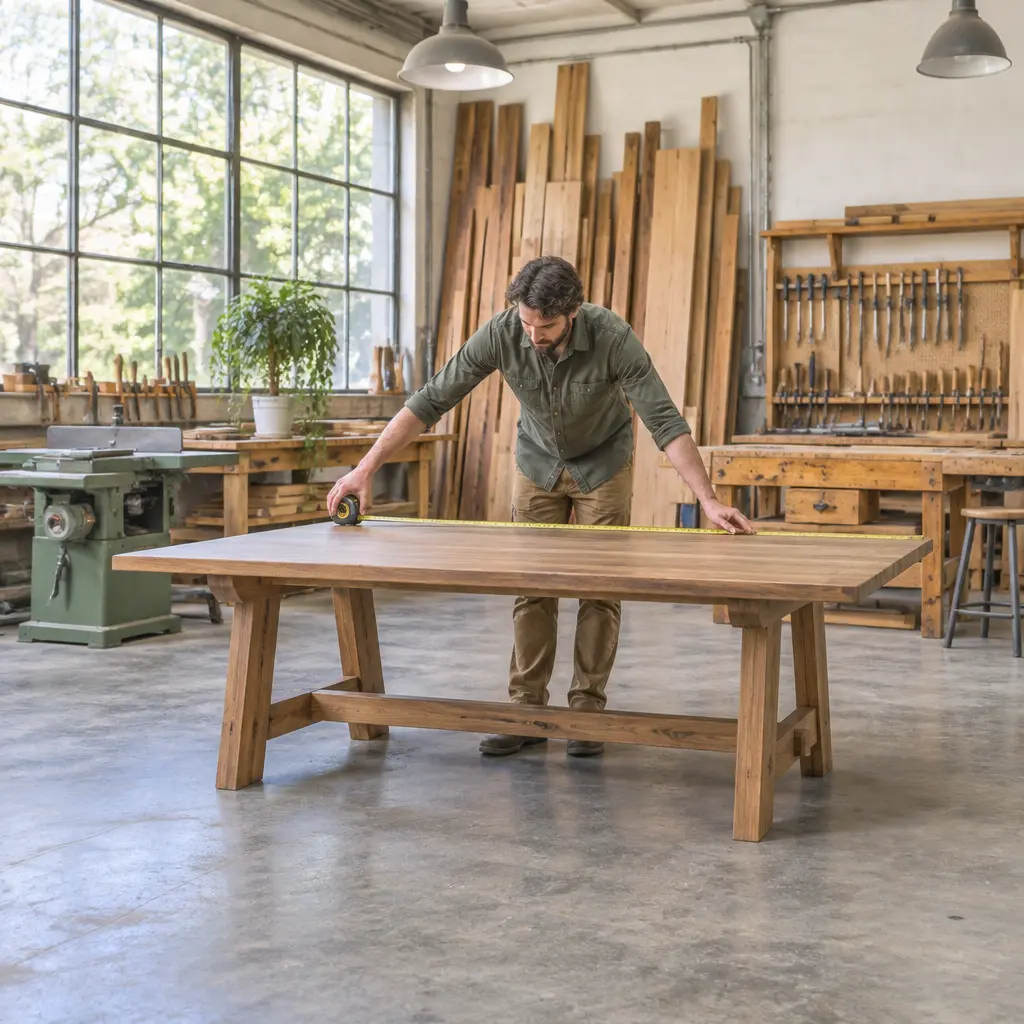
Custom furniture is furniture made or substantially adapted to a buyer’s specifications rather than selected as a standard, ready-made product. In the United States, a custom piece can cost from a few hundred dollars for a simple, small item to several thousand dollars—or more—for a large, complex, finely finished piece. The price depends on dimensions, materials, design and construction labor, finishing, delivery, and installation. Because there is no single industry-wide price list, the most useful way to estimate cost is to compare the scope of the work and the quality of the materials, then request itemized quotes.
Custom furniture pricing depends on scope, materials, and labor
Custom furniture pricing is the total amount charged to design, build, finish, and deliver furniture made to a particular customer’s requirements. The U.S. Bureau of Labor Statistics describes furniture makers as workers who construct, assemble, and repair furniture, often using woodworking machinery and hand tools; a custom quote must account for that skilled work as well as the materials used. Unlike a mass-produced item with a fixed retail price, a custom piece is a one-off project whose cost changes with its specifications.
The main cost categories are design and planning, materials, fabrication, finishing, and logistics. The U.S. Bureau of Labor Statistics’ May 2023 data put the median annual wage for woodworkers at $38,470, a broad occupational benchmark rather than a custom-furniture labor rate. A customer’s final price also includes business overhead, equipment, shop time, and profit, so that wage should not be treated as a direct hourly quote. The U.S. Bureau of Economic Analysis tracks furniture and related products as a distinct consumer-spending category, but it does not publish a standard price for individually commissioned furniture.
Typical project ranges
The ranges below are practical U.S. budgeting estimates, not official national averages. Local labor rates, the maker’s experience, wood species, hardware, design complexity, and delivery can shift a quote substantially.
- A small, simple custom side table or shelf may cost several hundred dollars to around $1,500.
- A custom dining table commonly falls around $1,500 to $6,000, with larger tables, premium slabs, elaborate joinery, or specialty finishes costing more.
- A made-to-measure desk or bookcase may range from roughly $1,000 to $5,000 or more, depending on size, storage, and installation.
- Built-in cabinetry, banquettes, and other fitted furniture can reach several thousand dollars and may be priced by project or linear foot.
- Upholstered custom sofas and chairs often cost more than basic case goods because they combine a frame, suspension, cushions, fabric, and upholstery labor; complex or premium pieces can cost several thousand dollars.
These categories are useful starting points, not substitutes for written estimates. A compact table made from common lumber is not comparable to a large live-edge table with a book-matched top, metal base, and hand-rubbed finish.
Design, construction, and finishing labor
Labor includes interpreting the brief, preparing drawings or templates, selecting and preparing stock, machining and joining parts, assembling the piece, sanding, applying finish, and correcting fit or surface issues. A straightforward design can still take substantial shop time, while curves, hidden storage, precise insets, intricate joinery, or a matching set add steps and opportunities for rework. Ask whether the quote includes design revisions, a prototype, and finishing; makers may bill these separately or incorporate them in the total.
Materials and hardware
Material cost reflects species, grade, thickness, sourcing, and waste, not simply the amount of wood visible in the finished piece. A maker may need to buy extra stock to select matching grain or avoid defects. Premium hardwoods, figured veneers, stone or metal components, specialty glass, and high-quality drawer slides and hinges can raise the bill. The Forest Products Laboratory, part of the U.S. Department of Agriculture’s Forest Service, publishes technical information about wood properties and performance; those properties matter because movement, hardness, and workability influence both material selection and construction.
Delivery, installation, and taxes
Large furniture may require crating, a delivery crew, stairs or elevator coordination, assembly, anchoring, or fitting to walls and floors. These services are distinct from shop fabrication and can add meaningful costs, especially for built-ins or heavy pieces. Confirm whether the quote includes delivery, installation, sales tax, and removal of packaging; also ask who pays if access constraints require extra labor.
Furniture type and customization level shape the quote
A useful comparison groups custom furniture by what is being made and how much the design departs from a standard form. “Custom” may mean anything from choosing dimensions and finish on an existing design to commissioning a one-of-a-kind object. These levels have different design demands, production risks, and price implications.
Made-to-measure furniture
Made-to-measure furniture adapts an established design to a specific width, height, depth, or room condition. Since the maker can reuse proven plans and construction methods, this is often less costly than developing a completely original design. It is a practical option for a desk that must fit an alcove, a dining table sized for a particular room, or shelving that needs to clear a window.
Semi-custom furniture
Semi-custom furniture starts with a maker’s standard model but allows selected changes, such as wood species, stain, upholstery fabric, leg style, or storage layout. This can offer a balance between personalization and price because the design and much of the production process are already established. Before ordering, verify which options are genuinely included and which trigger a redesign or upcharge.
Bespoke and built-in furniture
Bespoke furniture is designed around a particular buyer, space, or purpose, while built-ins are fitted to a room and may attach to walls or integrate with architectural features. Both can require site measurements, drawings, finish samples, and coordination with other trades. Irregular walls, concealed wiring, plumbing, structural conditions, and tight access can make installation more demanding than building a freestanding piece. For fitted work, ask whether the maker or a contractor is responsible for site preparation and final installation.
Upholstered and specialty pieces
Upholstered furniture combines a frame with webbing or springs, padding, cushions, fabric or leather, and skilled upholstery. Fabric choice affects cost through both the price per yard and the amount required to match patterns or direction. Specialty pieces such as curved seating, Murphy beds, media walls, and furniture with integrated lighting or moving parts add engineering and hardware considerations. Request a material schedule so the quote identifies the fabric, cushion construction, and mechanisms being supplied.
Materials, design choices, and market conditions affect cost
Once the furniture type is clear, the next step is to understand why two apparently similar pieces can receive very different quotes. Material selection, dimensions, details, and production timing all influence the amount of stock and labor required. The American Wood Council’s design resources explain that wood products have different structural and performance characteristics; in furniture, the relevant considerations include durability, appearance, stability, and suitability for the intended use.
Wood species, sheet goods, and grain selection
Oak, maple, cherry, walnut, and other hardwoods differ in appearance, availability, workability, and price. Plywood and veneers can be appropriate for stable panels and large surfaces, while solid wood may be preferred for edges, legs, or repairability. A book-matched or carefully aligned grain pattern can require more material and selection time than a standard layout. Ask the maker to specify the species and whether the quote uses solid wood, veneer, plywood, or a combination.
Size, shape, and complexity
Larger pieces usually consume more material and take more time to move, assemble, and finish. Complexity can increase cost even when a piece is small: curved surfaces, tapered parts, drawers, doors, concealed compartments, inlays, and exacting tolerances require additional operations. A clear sketch with dimensions and intended use helps makers estimate accurately and reduces the likelihood of expensive changes after fabrication begins.
Finish, durability, and maintenance
A finish affects both appearance and protection. Oil, lacquer, varnish, paint, and specialty finishes differ in application time, repairability, sheen, and resistance to wear. A kitchen or dining surface may need a different protection strategy from a decorative console. Request samples where color matters, and ask how the finish should be cleaned or renewed. The U.S. Environmental Protection Agency advises consumers to follow product labels and ventilation precautions when using household coatings and other products that can release volatile organic compounds.
Supply, location, and scheduling
Quotes may vary with local shop costs, material availability, freight, and the maker’s workload. A tight deadline can require schedule changes or expedited purchasing, while a highly specialized finish may depend on materials with longer lead times. Ask how long the quote is valid and whether the price can change if a specified material becomes unavailable. The U.S. Bureau of Labor Statistics’ Producer Price Index program tracks price changes received by domestic producers, including in manufacturing sectors, but such broad indexes do not predict the cost of a particular commissioned piece.
A careful quote comparison helps control custom furniture cost
The lowest estimate is not always the best value if it omits design work, installation, or a durable finish. Compare quotes on the same dimensions, materials, construction details, and delivery terms. A written scope also protects both the customer and maker by documenting expectations before work begins.
What to include in a quote request
Provide a reference image or sketch, approximate dimensions, intended use, room conditions, preferred materials, finish expectations, delivery location, and target timeline. State which features are essential and where you are flexible. For fitted furniture, include measurements and photos of the installation area, but have the maker confirm critical site dimensions before fabrication.
Questions to ask before approving an estimate
- Which materials, hardware, finish, and construction methods are included?
- Are design time, drawings, revisions, samples, and site visits included?
- Does the total include delivery, installation, taxes, and packaging removal?
- What are the deposit, milestone payments, cancellation terms, and change-order process?
- What is the expected completion date, and how will delays or material substitutions be handled?
- What warranty or repair support is offered, and what care does the finish require?
Ways to reduce cost without sacrificing essential quality
Simplify the shape, reduce optional storage or decorative details, choose a readily available species, and use a maker’s existing design as a starting point. Consider veneer or high-quality sheet goods for suitable panels while reserving solid wood for visible edges or structural parts. Avoid changing specifications after approval, since redesign and rework can add cost. Do not compromise on safe construction, appropriate hardware, or a finish suited to the furniture’s actual use.
Conclusion: budget for the complete custom furniture project
Custom furniture cost is determined by more than the visible materials: design time, construction, finishing, delivery, and installation all contribute. Made-to-measure and semi-custom options can keep costs lower by building on established designs, while bespoke, upholstered, and built-in projects typically demand more planning and skilled labor. Use broad price ranges only as an initial guide, then compare itemized quotes that specify dimensions, materials, finish, schedule, and services.
To get a reliable estimate, prepare a clear brief, ask makers to explain assumptions, and confirm the full delivered price before paying a deposit. For further guidance, consult furniture makers’ project portfolios, wood-care resources from the Forest Products Laboratory, and consumer information from the U.S. Environmental Protection Agency about finishes and safe product use.
Sources: U.S. Bureau of Labor Statistics, Occupational Employment and Wage Statistics, May 2023, Woodworkers, https://www.bls.gov/oes/2023/may/oes517041.htm; U.S. Bureau of Labor Statistics, Occupational Outlook Handbook, Woodworkers, https://www.bls.gov/ooh/production/woodworkers.htm; U.S. Bureau of Economic Analysis, National Income and Product Accounts, https://www.bea.gov/data/consumer-spending/main; U.S. Department of Agriculture, Forest Service, Forest Products Laboratory, https://www.fpl.fs.usda.gov/; American Wood Council, Wood Products, https://awc.org/; U.S. Environmental Protection Agency, Volatile Organic Compounds’ Impact on Indoor Air Quality, https://www.epa.gov/indoor-air-quality-iaq/volatile-organic-compounds-impact-indoor-air-quality; U.S. Bureau of Labor Statistics, Producer Price Indexes, https://www.bls.gov/ppi/